
Back
FBI Fitness Test Preparation for the Special Agent PFT
By GetOPT Review Team · October 27, 2026
·Part of our Body Composition Guide
The FBI fitness test for Special Agent applicants includes pull-ups, a 300-meter sprint, push-ups, and a 1.5-mile run in that order. You need a qualifying overall score and must meet the minimum for every event. The public FBI Jobs page does not list point values, minimum times, or repetition requirements. Applicants receive current scoring information from the FBI and through the FBI FitTest app.1
The Four FBI PFT Events
The FBI Jobs Physical Requirements page identifies four events in a fixed order.1
| Order | Event | Main Preparation Focus |
|---|---|---|
| 1 | Pull-ups | Repeatable upper-body pulling strength |
| 2 | 300-meter sprint | Fast running after pull-ups |
| 3 | Push-ups | Upper-body endurance under fatigue |
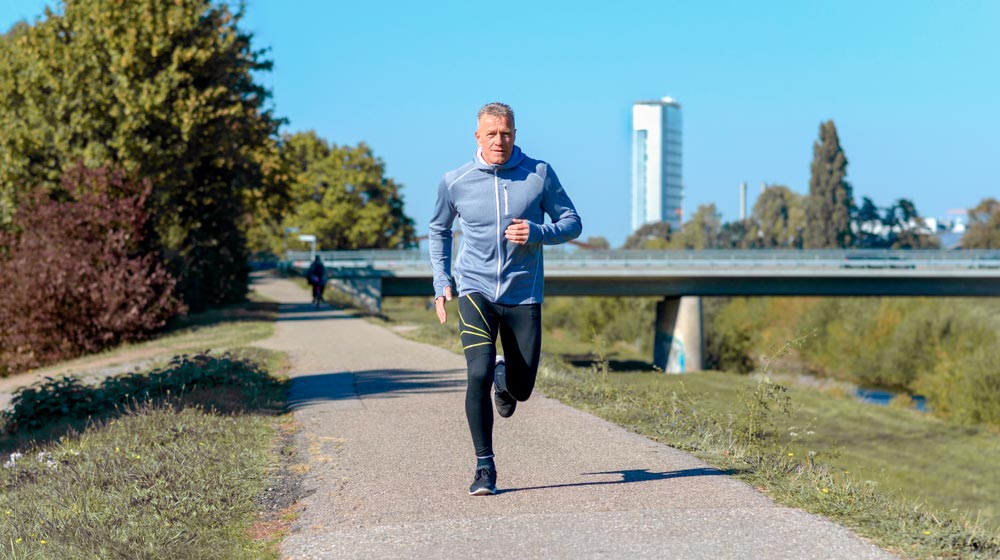
| 4 | 1.5-mile run | Controlled pacing after three prior events |
The sequence changes how you should prepare. A strong run completed on its own does not show how you will run after pull-ups, a sprint, and push-ups. Your training should include individual event practice and sessions that preserve the official order.
The FBI states that applicants must earn a qualifying score while meeting the minimum requirement for each event.1 A strong result in one event does not erase a result below the minimum in another. Balanced preparation gives you a better path than building your plan around your favorite event.
FBI PFT Scoring and Qualification
The FBI PFT uses event minimums and an overall qualifying score.1 The public FBI Jobs page does not publish the point scale, minimum times, minimum repetition counts, or any sex-specific standards.
Use the current information provided during your application process. The FBI also offers the FBI FitTest app for preparation and scoring support.1 Standards can affect your application, so unofficial charts and old forum posts should not replace the information given to you by the FBI.
You have three opportunities to pass the physical fitness test after successfully completing the Meet and Greet.1 The FBI also requires a self-evaluation PFT, which gives you a structured way to assess your readiness before an official attempt.1
Record each self-evaluation under similar conditions. Keep the event order consistent and note where your form, pace, or output changes. Your weakest event deserves more attention, but it should remain part of a complete four-event plan.
An event minimum gives you one threshold. Results across all four events show the pattern your preparation needs to address.
Pull-Up Preparation
Pull-up preparation should develop repeatable pulling strength with consistent technique. Every repetition should look controlled enough that you can compare one practice session with the next.
Start by recording the pull-up performance you can complete with stable form. Your training can then use full repetitions, controlled lowering work, and assisted repetitions based on your current ability. Avoid turning every session into a maximum-effort test. Practice gives you more useful information when fatigue does not change your movement beyond recognition.
You start the sprint with a tired grip. Include occasional sequence practice so you learn how quickly you can settle into the next event.
If shoulder, elbow, or hand pain changes your movement, timed testing is a poor way to investigate it. Pause the test practice and seek an appropriate clinical evaluation before returning to maximum efforts.
The 300-Meter Sprint
The 300-meter sprint tests your ability to run fast within the full PFT sequence. Your preparation should include the exact event distance and enough recovery between hard efforts to preserve running form.
Begin with a controlled baseline rather than an all-out attempt on your first session. Note whether you start too fast, lose posture, or slow sharply before the finish. That information gives you a specific problem to work on during later practices.
Sprint preparation can include shorter accelerations, practice at the event distance, and easier running between harder sessions. The purpose of the shorter work is to rehearse acceleration and form. The event-distance practice shows how well you sustain speed through the full 300 meters.
The sprint should also appear in some full-sequence sessions. Pull-ups come first, so an isolated track result gives you only part of the picture. Practice the transition from the pull-up area to the sprint setup before the official test.
Push-Up Preparation
Push-up preparation should focus on repeatable repetitions after the sprint. The event arrives when your breathing is elevated, which makes controlled pacing worth practicing.
Use the technique and scoring instructions provided to you by the FBI. Unofficial variations may train a different movement or count repetitions that would not be accepted during your assessment.
Your training can include submaximal sets, technique work, and occasional event-specific assessments. Stop a practice set when your form no longer matches the standard you are using. A longer set has little value if the repetitions cannot be compared with the official requirement.
Full-sequence practice also helps you choose a sustainable opening pace. Starting too quickly can change your form before the set is complete. Record the point at which your technique begins to change, then use that observation to shape later sessions.
The 1.5-Mile Run
The 1.5-mile run is the final FBI PFT event. Your preparation needs to account for the work already completed during pull-ups, the sprint, and push-ups.
Use measured practice runs to learn a pace you can maintain across the full distance. Record your total time. Note whether your pace drops sharply over the final portion. A consistent record gives you more useful feedback than relying on how hard one run felt.
Your running plan can combine the official distance, shorter running intervals, and easier aerobic work. Each session has a separate job. The full-distance run checks pacing, while shorter efforts let you rehearse faster running without turning every workout into a complete PFT.
Include the 1.5-mile run at the end of selected sequence practices. This shows whether your isolated running result carries into the test order. It also lets you practice settling into a sustainable pace after push-ups.
A Complete FBI PFT Training Plan
An FBI PFT training plan should combine focused event practice with full-sequence rehearsals. You need enough individual work to improve each event and enough combined work to understand how the four events interact.
A generic plan gives every applicant the same priorities. Your self-evaluation results should determine how much attention each event receives while keeping the complete sequence in view.
Build your plan around your self-evaluation results:
- Pull-up limitation: Give more training attention to controlled pulling strength while maintaining the other three events.
- Sprint limitation: Practice acceleration, event-distance pacing, and the transition from pull-ups.
- Push-up limitation: Develop repeatable technique and pacing after fast running.
- Run limitation: Build familiarity with the 1.5-mile distance and practice it after the first three events.
- Multiple limitations: Reduce the emphasis on maximum-effort testing and spend more time building consistent movement across the complete sequence.
A full rehearsal should preserve the official order: pull-ups, 300-meter sprint, push-ups, and 1.5-mile run.1 Record the same details each time so you can see whether the plan is producing a stable trend.
The FBI test is specific to Special Agent applicants. State and city agencies can use different events and standards, which are covered in the police fitness test guide. If you are moving from military service into federal law enforcement, the military fitness test guide can help you separate familiar service requirements from the FBI sequence.
This plan is unsuitable if an injury, chest pain, dizziness, or another medical concern makes maximum physical testing unsafe. Seek medical evaluation before resuming timed attempts.
Recovery and Sleep During Preparation
Recovery affects how consistently you can complete your training. Your plan should leave enough room for sleep and easier work between demanding sessions.
Sleep deserves attention because restriction can change hormone levels. Leproult and Van Cauter found that daytime testosterone levels decreased by 10% to 15% in a small convenience sample of young healthy men after one week of sleep restricted to five hours per night.2 The study took place under laboratory conditions and did not test FBI PFT performance or older men.
Sleep is a variable worth tracking alongside your training results, but the study does not predict your score. If your performance drops, review your recent workload, sleep, and symptoms together instead of blaming one event or one difficult session.
Self-Evaluation and Test Readiness
A self-evaluation PFT gives you a baseline for the complete test. The FBI requires this self-assessment and provides the FBI FitTest app as a preparation resource.1
Run the events in the official order and follow the current instructions supplied to you. Record your result for each event, the transitions, and any technique breakdown. Repeat the same process later under comparable conditions.
One weak result is a data point. Repeated difficulty in the same event is a pattern. Use that pattern to decide where your next block of preparation needs more attention.
Your readiness decision should use current FBI scoring information. The public Physical Requirements page confirms the structure and qualification rules, while applicant materials and the FBI FitTest app provide the scoring details you need.1
The Opt Take on FBI Fitness Test Preparation
At Opt Health, a physician reads your labs alongside your recovery, sleep, symptoms, and training. The physician builds a personalized health plan, while your FBI preparation continues to cover strength, speed, and endurance. Both plans should respond to the pattern in your data.
Your initial panel includes 55+ biomarkers across hormones, inflammation, cardiovascular risk, and other areas. A physician reviews your results before treatment is offered. Labs and the physician consultation repeat every three to four months, so the plan can be adjusted based on what your numbers did.
The PFT result remains specific to your event preparation. Medical data does not replace pull-ups, sprint work, push-ups, or running. It gives your physician more context when your recovery, symptoms, and training results stop moving in the same direction.
Bring your training record into the physician review, so your physician can read changes in your performance, sleep and symptoms alongside your biomarkers.
Get started: Begin with Opt Health, where a physician reads your labs, builds your plan, and adjusts it over the loop.
Frequently Asked Questions
The FBI Physical Fitness Test is the physical assessment used for Special Agent applicants. It includes pull-ups, a 300-meter sprint, push-ups, and a 1.5-mile run in that order.1 You must earn a qualifying overall score and meet the minimum requirement for every event.
The FBI fitness test requires a qualifying score and the minimum result for each event.1 The public FBI Jobs page does not publish the point scale or event minimums. Use the current scoring information provided to you during the application process and through the FBI FitTest app.
The FBI fitness test can be demanding because it combines upper-body strength, sprinting, push-ups, and distance running in one sequence. Your baseline determines which event needs the most preparation. A self-evaluation PFT gives you a better answer than comparing your training with another applicant’s results.
The public FBI Jobs page does not publish the minimum 1.5-mile time.1 The FBI provides current scoring information to applicants and through the FBI FitTest app. Use those materials when deciding whether your current run meets the requirement.
Your FBI PFT results show how your training is progressing, while comprehensive labs can give a physician more context about your recovery and health. An Opt Health membership pairs 55+ biomarkers with a physician who builds your plan and adjusts it every three to four months.
References
- FBI Jobs. Physical requirements. Accessed October 27, 2026. https://www.fbijobs.gov/special-agents/physical-requirements
- Leproult R, Van Cauter E. Effect of 1 week of sleep restriction on testosterone levels in young healthy men. JAMA. 2011;305(21):2173-2174. https://pubmed.ncbi.nlm.nih.gov/21632481/
This content is for informational purposes and does not replace evaluation, diagnosis, or treatment by a qualified medical professional.
This article is part of our guide to body composition. See the doctor-guided body composition program at Opt Health.

Start Today
Your health, your terms. Discover how personalized care can transform not just the way you feel, but how you live.