
Rosacea treatment works best when the medicine matches what shows on your face. For bumps and pustules, prescription creams with ivermectin, metronidazole or azelaic acid are first-line options, and alpha-adrenergic agonists treat flushing.1 The German S2k guideline names brimonidine or oxymetazoline for persistent redness and low-dose doxycycline when bumps resist topicals.2 Daily sunscreen, moisturizer, a mild cleanser and avoiding your triggers support every plan.1 Your clinician picks the combination from your features, and eye symptoms call for a referral.
The Features That Shape Your Rosacea Plan
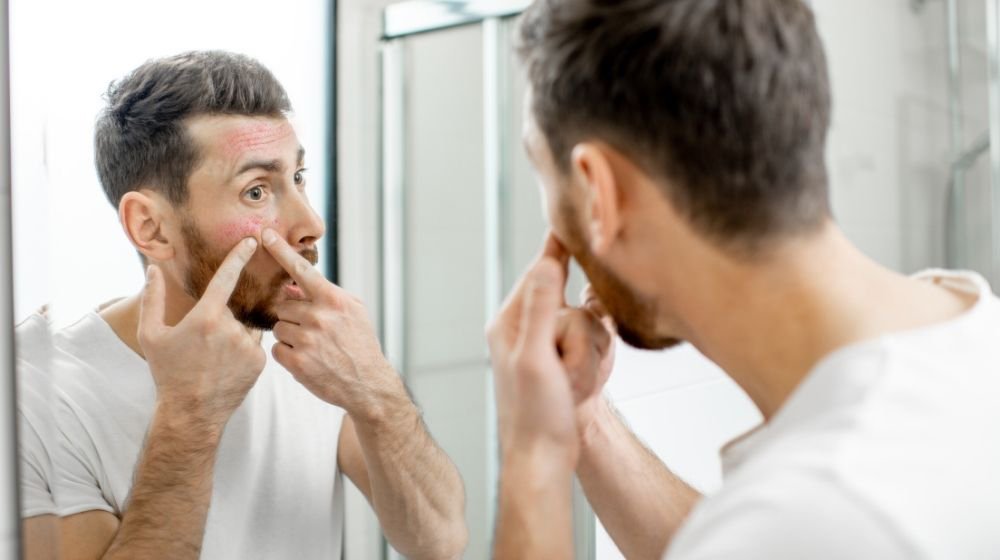
Rosacea is a chronic inflammatory skin disease of the central face that affects about 5% of the population, and its exact cause is unknown.1 Clinicians diagnose it from what they see. The features include fixed redness, small visible blood vessels (telangiectasia), papules, pustules, flushing and thickened skin from sebaceous gland overgrowth (phymatous change).1
The German S2k guideline describes how the picture often shifts over time. Early rosacea tends to show recurrent redness, visible vessels and flushing. Later, inflammation takes over, with persistent redness plus papules and pustules.2
Different features respond to different drug classes.2 Azelaic acid and ivermectin are labeled for the bumps, brimonidine and oxymetazoline for persistent redness, and the Noritate metronidazole label covers both inflammatory lesions and erythema.4-8 A GRADE review of 152 trials and 20,944 participants graded the evidence feature by feature, and your plan can follow the same logic.3
If you have darker skin, redness and visible vessels can be harder to see, and diagnosis and treatment may be delayed as a result.1 Describe your flushing, burning and bumps in detail at your visit so the pattern gets named early.
If you are not sure whether your bumps are rosacea or acne, read adult acne in men first, because the treatments differ.
Prescription Creams for Bumps and Pustules
Three topical drugs carry the strongest guideline support for the inflammatory bumps of rosacea: metronidazole, azelaic acid and ivermectin.2 Each has an FDA-approved prescription product.
- Metronidazole. Noritate (metronidazole) cream, 1% is FDA-labeled for the topical treatment of inflammatory lesions and erythema of rosacea.4 The GRADE review rated the evidence for topical metronidazole as moderate certainty.3 The label notes reports of conjunctivitis with facial use, so keep it away from your eyes.4
- Azelaic acid. Finacea (azelaic acid) Foam, 15% is FDA-labeled for the inflammatory papules and pustules of mild to moderate rosacea.5 The evidence for topical azelaic acid was rated high certainty.3
- Ivermectin. Soolantra (ivermectin) cream, 1% is FDA-labeled for the inflammatory lesions of rosacea.6 The evidence for topical ivermectin was also rated high certainty.3 In its controlled trials, the most common adverse reactions were skin burning and skin irritation, each at 1% or less.6
All three are prescription products, and each label is marked Rx only.4-6 Your prescriber chooses among them based on your skin's tolerance, the extent of your bumps and what you have already tried. The dose and schedule come from that prescriber and the label.
Prescription Treatments for Persistent Redness
Persistent background redness responds to a different mechanism. Brimonidine and oxymetazoline are vasoconstrictors, which means they narrow the small blood vessels that make the face look red.2
Mirvaso (brimonidine) topical gel, 0.33% is FDA-labeled for persistent (nontransient) facial erythema of rosacea in adults 18 years or older.7 The GRADE review found high-certainty evidence that brimonidine temporarily reduces persistent redness.3 The label states that its effect may begin to diminish hours after application.7
Rhofade (oxymetazoline hydrochloride) cream, 1% is FDA-labeled for persistent facial erythema associated with rosacea in adults.8 The evidence for oxymetazoline was rated moderate certainty.3
Both labels carry cardiovascular cautions. Alpha-2 agonists such as brimonidine can lower blood pressure, and the Mirvaso label advises caution in severe, unstable or uncontrolled cardiovascular disease.7 The Rhofade label notes that this drug class may affect blood pressure and tells patients to seek immediate care for signs of acute narrow-angle glaucoma.8 Your prescriber should know your blood pressure, your heart history and every medicine you take before either one goes on your face.
How the Options Compare by Feature
| Your main feature | Options named in guidelines and labels | Evidence certainty (GRADE review) |
|---|---|---|
| Papules and pustules | Azelaic acid, ivermectin, metronidazole creams2,4-6 | High for azelaic acid and ivermectin; moderate for metronidazole3 |
| Persistent redness | Brimonidine gel, oxymetazoline cream, metronidazole cream2,4,7,8 | High for brimonidine; moderate for oxymetazoline3 |
| Visible vessels | Laser and intense pulsed light3 | Low to moderate3 |
| Resistant or severe bumps | Low-dose doxycycline; low-dose isotretinoin as an alternative2 | Moderate to high for both3 |
| Eye symptoms | Lid margin hygiene, ciclosporin eye drops2; oral omega-33 | Low for ciclosporin; moderate for oral omega-33 |
If you have more than one feature, each one may need its own drug class. Start with the feature that bothers you most, and let your prescriber match the drug class and track the result.
Rosacea Triggers and Daily Skin Care
Trigger avoidance is part of first-line care in both the German guideline and the family-physician review.1,2 A review of diet and rosacea found that alcohol, spicy food and hot drinks are among the most frequently reported triggers.9 The same review lists foods containing cinnamaldehyde (such as tomatoes, citrus and chocolate) and histamine-rich foods (such as aged cheese, wine and processed meats).9
Alcohol worsens flushing, according to that review.9 The authors also concluded that no single dietary recommendation applies to every patient.9 Your own trigger list is personal, so a short symptom diary gives your clinician better information than a generic food list.
Sunscreen, moisturizer and a mild cleanser used every day are part of maintenance treatment.1 These are the over-the-counter pieces of your plan, and they stay in place alongside any prescription.
Oral Treatment for Resistant Rosacea
When bumps resist topical treatment or the disease is severe, the German S2k guideline recommends systemic therapy. Its drug of choice is low-dose doxycycline, with low-dose isotretinoin as an alternative.2 The GRADE review rated the evidence for both as moderate to high certainty for papules and pustules.3
The family-physician review also lists nonselective beta blockers as a systemic option for flushing.1 Each of these is a prescription with its own monitoring needs. Your prescriber sets the drug, the dose and the length of the course, and decides when to step back down to topical maintenance.
Ocular Rosacea and Eye Referral
Rosacea can involve the eyes, and the family-physician review recommends referral for ocular rosacea and for fixed thickened skin.1 If your eyes or eyelids bother you alongside facial rosacea, raise it with your clinician so an eye assessment becomes part of your plan.
The German guideline treats ocular rosacea with lid margin hygiene and suggests topical options including ciclosporin eye drops.2 The GRADE review found moderate-certainty evidence that oral omega-3 fatty acids helped ocular rosacea, and low-certainty evidence for ciclosporin eye drops and doxycycline.3 Once your eyes are assessed, your clinician can pair lid care with an eye-specific treatment and check it at follow-up.
Compounded Combination Creams and FDA Status
A compounded rosacea cream mixes several ingredients in one base, prepared by a pharmacy to a prescription. The FDA states that compounded drugs are not FDA-approved, which means the agency does not verify their safety, effectiveness or quality before they are marketed.10
A prescriber can still choose a compounded cream for a reason specific to your skin. The FDA labels for Noritate, Finacea, Soolantra, Mirvaso and Rhofade each cover a single-ingredient product, and none of them covers a compounded combination.4-8 Ask your prescriber which ingredients are in the formula, why each one is there and how you will both judge whether it is working.
For brown patches on the face, which are a different condition, see melasma treatment. Questions about retinoids belong on tretinoin for men.
The Opt Take on Rosacea Treatment
Rosacea is a chronic condition, so your treatment gets adjusted over months.1 Rosacea care is easier to adjust when the person prescribing your cream also knows the rest of your health. The Mirvaso and Rhofade labels carry blood pressure and cardiovascular cautions, so your prescriber needs your full picture.7,8 At Opt Health, your existing conditions and current medications are reviewed at the initial consultation.
Your plan starts with a 55+ biomarker panel and a 1:1 review with an Opt Health physician, who builds a treatment plan that can include prescriptions shipped to your home. Full labs and a physician consultation repeat every 3 to 4 months, and the plan is adjusted on what changed. Between visits, the care team is reachable by chat in the Opt app 7 days a week.
Get started: Begin with Opt Health, where a physician reads your labs, builds your plan, and adjusts it over the loop.
Frequently Asked Questions
The right cream depends on your main feature. For papules and pustules, FDA-labeled options include ivermectin, azelaic acid and metronidazole, and the GRADE review rated ivermectin and azelaic acid at high certainty.3-6 For persistent redness, brimonidine and oxymetazoline are FDA-labeled.7,8 Your prescriber matches the cream to your features and adjusts it as your skin responds.
Noritate, Finacea, Soolantra, Mirvaso and Rhofade are prescription products, and each label is marked Rx only.4-8 The over-the-counter part of your care is daily sunscreen, moisturizer and a mild cleanser, which the family-physician review lists as part of maintenance treatment.1 A prescriber is your route to the medicated creams.
None of the five FDA-labeled rosacea products (Noritate, Finacea, Soolantra, Mirvaso and Rhofade) is a steroid. Ivermectin, metronidazole and azelaic acid treat inflammatory bumps, while brimonidine and oxymetazoline are alpha-adrenergic agonists that narrow small facial blood vessels.4-8 If a cream you were given contains a steroid, ask your prescriber why it was chosen for your skin.
It depends on the drug. The Finacea label tells clinicians to reassess the diagnosis if there is no improvement after 12 weeks of treatment.5 For brimonidine, the label states that its effect may begin to diminish hours after application, so the redness benefit is temporary.7 Give your prescriber a progress report at each check-in so the plan can change on time.
It can for some people. On the Mirvaso label, some trial subjects reported redness returning worse than at baseline, and the redness appeared to resolve after they stopped the gel.7 Burning and skin irritation were the most common reactions to Soolantra in its trials.6 Tell your prescriber about any flare after starting a cream so the drug or the plan can change.
A "triple" rosacea cream is a compounded preparation that combines several active ingredients in one base, and the formula depends on the prescription. The FDA states that compounded drugs are not FDA-approved and that it does not verify their safety, effectiveness or quality before marketing.10 Ask your prescriber what each ingredient is meant to treat on your skin.
Rosacea care works best when your prescriber knows your whole health picture. An Opt Health membership starts with 55+ biomarkers and a 1:1 physician review, then repeats labs and a physician consultation every 3 to 4 months.
References
- Frazier W et al. Rosacea: common questions and answers. Am Fam Physician. 2024;109(6):533-542. https://pubmed.ncbi.nlm.nih.gov/38905551/
- Clanner-Engelshofen BM et al. S2k guideline: rosacea. J Dtsch Dermatol Ges. 2022;20(8):1147-1165. https://pubmed.ncbi.nlm.nih.gov/35929658/
- van Zuuren EJ et al. Interventions for rosacea based on the phenotype approach: an updated systematic review including GRADE assessments. Br J Dermatol. 2019;181(1):65-79. https://pubmed.ncbi.nlm.nih.gov/30585305/
- Bausch Health US, LLC. Noritate (metronidazole) cream, 1% [package insert]. DailyMed. Published April 26, 2023. Accessed October 14, 2026. https://dailymed.nlm.nih.gov/dailymed/drugInfo.cfm?setid=706b09da-6cf9-421d-8e91-f3999474d322
- LEO Pharma Inc. Finacea (azelaic acid) foam, 15% [package insert]. DailyMed. Published December 18, 2020. Accessed October 14, 2026. https://dailymed.nlm.nih.gov/dailymed/drugInfo.cfm?setid=9fabd24e-4c3b-49a0-aa5f-c8d75ae67572
- Galderma Laboratories, L.P. Soolantra (ivermectin) cream, 1% [package insert]. DailyMed. Published October 28, 2024. Accessed October 14, 2026. https://dailymed.nlm.nih.gov/dailymed/drugInfo.cfm?setid=b1d5b166-ab06-4ab5-b0c6-31126238118a
- Galderma Laboratories, L.P. Mirvaso (brimonidine) topical gel, 0.33% [package insert]. DailyMed. Published October 28, 2024. Accessed October 14, 2026. https://dailymed.nlm.nih.gov/dailymed/drugInfo.cfm?setid=f6a4353f-ae69-4214-901f-e5d42a6fbde7
- Mayne Pharma. Rhofade (oxymetazoline hydrochloride) cream, 1% [package insert]. DailyMed. Published July 9, 2025. Accessed October 14, 2026. https://dailymed.nlm.nih.gov/dailymed/drugInfo.cfm?setid=f7dbf12e-a802-4261-bae2-c20977698933
- Searle T et al. Rosacea and diet: what is new in 2021? J Clin Aesthet Dermatol. 2021;14(12):49-54. https://pubmed.ncbi.nlm.nih.gov/35096255/
- U.S. Food and Drug Administration. Compounding and the FDA: questions and answers. Content current as of September 16, 2025. Accessed October 14, 2026. https://www.fda.gov/drugs/human-drug-compounding/compounding-and-fda-questions-and-answers
This content is for informational purposes and does not replace evaluation, diagnosis, or treatment by a qualified medical professional.
This article is part of our guide to skin health. See the Opt Health radiant skin protocol.
You might also like
Start Today
Your health, your terms. Discover how personalized care can transform not just the way you feel, but how you live.