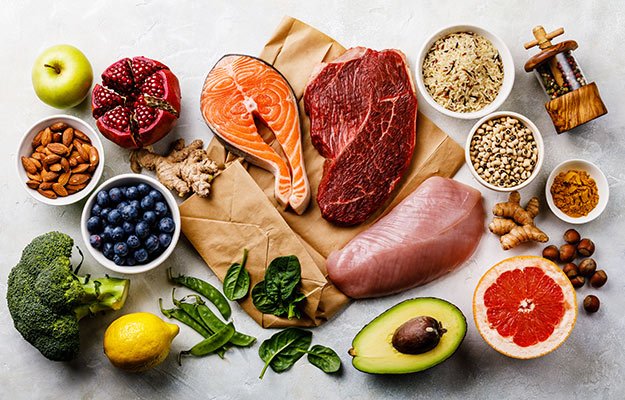
The government number and the training number are different numbers, and most confusion about protein comes from mixing them. The Recommended Dietary Allowance of 0.8 g per kilogram of body weight is the amount that prevents deficiency in a sedentary adult.1 It was never a target for someone lifting four days a week, and the sports-nutrition literature has settled on figures roughly twice that size.2,3
The calculator below applies those published ranges to your weight and goal, and shows which range it used.
Subscribe for more
Join our newsletter to get the latest news, tips, and stories from Opt Health.
Protein intake calculator
Enter your weight, how you train, and what you are trying to do. The tool returns a daily protein range and a per-meal split, and shows the grams-per-kilogram figure it used.
Daily protein range
…
A reasonable target
…
Per meal
…
These ranges come from sports-nutrition position stands for healthy adults.2,3 If you have reduced kidney function, protein intake is set with your physician and is often lower than these figures.4
Where these ranges come from
Three sources set the numbers.
- The International Society of Sports Nutrition position stand recommends 1.4 to 2.0 g/kg per day for building and maintaining muscle in physically active people.2
- A meta-analysis of 49 resistance-training studies found that gains in lean mass stopped improving beyond about 1.6 g/kg per day, with the upper bound of the confidence interval at 2.2 g/kg.5 That is why the build range in the tool tops out at 2.2.
- During a calorie deficit, requirements rise. A systematic review of resistance-trained lean athletes in a deficit supports 2.3 to 3.1 g per kilogram of lean mass to preserve muscle while losing fat.3 For a lean man that works out near 1.8 to 2.7 g per kilogram of total body weight, which is the figure the calculator uses.
Above those ranges, the evidence for further benefit stops. Higher intakes are not shown to be harmful in healthy adults with normal kidney function, and they are also not shown to add anything.2
Why the tool splits it per meal
Total daily protein is the variable that matters most. Distribution is a secondary effect and it is real. Muscle protein synthesis responds to a dose of roughly 0.4 g/kg per sitting in most adults, above which the extra protein is oxidised rather than used for building tissue.6 For a 185 lb man that is around 34 g per meal. A single large evening portion is therefore a less efficient way to reach the same daily total than three or four spread across the day.
The size of that per-meal dose also rises with age. Older adults show a blunted response to protein, known as anabolic resistance, and need a larger per-meal amount to trigger the same synthesis.7 If you are over 50 and training, sit at the upper end of the range the tool gives you.
Practical takeaway: hit the daily total first. Then split it across three or four meals of similar size rather than backloading it.
What that looks like in food
| Food | Typical serving | Protein |
|---|---|---|
| Chicken breast, cooked | 6 oz (170 g) | ~52 g |
| Lean beef, cooked | 6 oz (170 g) | ~48 g |
| Salmon, cooked | 6 oz (170 g) | ~42 g |
| Greek yoghurt, plain | 1 cup (227 g) | ~20 g |
| Whole eggs | 3 large | ~19 g |
| Cottage cheese | 1 cup | ~25 g |
| Whey protein | 1 scoop (30 g) | ~24 g |
| Lentils, cooked | 1 cup | ~18 g |
| Tofu, firm | 1 cup | ~20 g |
Our guide to the best bulking foods covers the highest-protein choices in more detail. Figures are approximate and vary by cut, brand, and cooking method.8 Two observations follow from the table. A 160 g daily target is four solid protein servings, which is achievable without powder. And plant sources carry fewer grams per calorie, so a plant-based diet at the same target usually needs one extra serving and more attention to leucine content.2
A worked 170 g day
Targets are easier to act on when you have seen one assembled. This is 170 g across four meals for an 84 kg man, close to the middle of the build range.
| Meal | What is in it | Protein |
|---|---|---|
| Breakfast | 3 whole eggs and 1 cup of Greek yoghurt | ~39 g |
| Lunch | 6 oz chicken breast with rice and vegetables | ~52 g |
| Afternoon | 1 cup cottage cheese and a handful of almonds | ~31 g |
| Dinner | 6 oz salmon with potatoes and greens | ~44 g |
| Total | ~166 g |
Four meals, no powder, and every sitting clears the per-meal dose. Writing it out matters because 170 g sounds like a lot until you see it as four ordinary plates.
Plant protein needs a larger serving
Protein sources are not interchangeable gram for gram, and the difference is leucine. Leucine is the amino acid that triggers muscle protein synthesis, and the response is driven by reaching a threshold dose of it rather than by total protein alone.9 Whey is roughly 10 to 11 percent leucine by weight and animal proteins generally sit near 8 to 9 percent. Most plant proteins fall below that.9
The practical consequence is a larger serving. A 20 g dose of wheat protein produced a smaller muscle protein synthesis response than the same dose of whey, and 60 g of wheat protein was needed to match it.10 Two adjustments follow for anyone eating mostly plants. Aim at the upper end of the range the calculator gives you, and prefer the higher-leucine plant sources such as soy and pea protein, or combine sources within a meal.
Protein, testosterone, and body composition
Protein intake does not raise testosterone. The relationship runs the other way round. Testosterone is one of the signals that determines how much of the protein you eat ends up as muscle. Two men eating the same 170 g a day on the same programme can get different results for that reason.11 If your training and nutrition are in order and your body composition is still moving in the wrong direction, that is a reason to look at a hormone panel rather than to add another scoop.
One finding is often reported backwards. Very low-fat, very high-protein diets have been associated with lower testosterone in some analyses, though the effect sizes are small and the evidence is mixed.12 This is not a reason to eat less protein. It is a reason not to strip dietary fat to nothing while raising protein.
Two adjustments worth making after 50
Requirements do not fall with age, and the evidence points the other way. Older adults show a blunted muscle protein synthesis response to a given dose of protein, so the per-meal amount needed to trigger the same response is larger.7 Aim at the top of the range the calculator returns rather than the middle.
The second adjustment is the last meal of the day. Protein eaten before sleep is digested and used overnight, and a pre-sleep dose has been shown to raise overnight muscle protein synthesis rates in men after evening training.13 If your protein is currently backloaded into a single large dinner, moving part of it earlier and keeping a modest portion late is a better use of the same total.
Frequently asked questions
For a physically active adult, 1.4 to 2.0 g per kilogram of body weight per day.2 For a 185 lb man that is roughly 118 to 168 g. The 0.8 g/kg RDA is a deficiency floor for sedentary adults, not a training target.1
In healthy adults with normal kidney function, intakes well above these ranges have not been shown to cause harm in controlled studies.2 They have also not been shown to add benefit. If you have chronic kidney disease, protein intake is a clinical decision and is often restricted.4
About 0.4 g per kilogram of body weight per sitting, which is roughly 30 to 40 g for most men.6 Older adults need more per meal to get the same response.7
No. Powder is a convenient way to hit a total that whole food can also reach. It matters if your schedule makes four protein-containing meals unrealistic, or if you are plant-based and struggling to reach the number.
Less than the daily total and less than the per-meal split. The post-workout window is wider than the older literature suggested, and total intake across the day is the stronger predictor of change in lean mass.5
The bottom line
Take the range the tool gives you, aim near the middle of it, and split it across your meals. Revisit the number when your weight or your training changes, and treat plateaus that persist at a correct intake as a signal to look elsewhere.
When the numbers are right and the results are not
If you are hitting this target, training consistently, and still losing lean mass, the limit is not the food. Track it with the FFMI calculator. Testosterone, thyroid function, and insulin sensitivity all change how much of what you eat becomes muscle, and a panel is the only way to see which one is moving. Become an Opt Health member.
References
- Institute of Medicine. Dietary Reference Intakes for Energy, Carbohydrate, Fiber, Fat, Fatty Acids, Cholesterol, Protein, and Amino Acids. Washington, DC: National Academies Press; 2005.
- Jäger R, Kerksick CM, Campbell BI, et al. International Society of Sports Nutrition position stand: protein and exercise. J Int Soc Sports Nutr. 2017;14:20.
- Helms ER, Zinn C, Rowlands DS, Brown SR. A systematic review of dietary protein during caloric restriction in resistance trained lean athletes: a case for higher intakes. Int J Sport Nutr Exerc Metab. 2014;24(2):127-138.
- Ikizler TA, Burrowes JD, Byham-Gray LD, et al. KDOQI clinical practice guideline for nutrition in CKD: 2020 update. Am J Kidney Dis. 2020;76(3 suppl 1):S1-S107.
- Morton RW, Murphy KT, McKellar SR, et al. A systematic review, meta-analysis and meta-regression of the effect of protein supplementation on resistance training-induced gains in muscle mass and strength in healthy adults. Br J Sports Med. 2018;52(6):376-384.
- Moore DR, Churchward-Venne TA, Witard O, et al. Protein ingestion to stimulate myofibrillar protein synthesis requires greater relative protein intakes in healthy older versus younger men. J Gerontol A Biol Sci Med Sci. 2015;70(1):57-62.
- Wall BT, Gorissen SH, Pennings B, et al. Aging is accompanied by a blunted muscle protein synthetic response to protein ingestion. PLoS One. 2015;10(11):e0140903.
- US Department of Agriculture, Agricultural Research Service. FoodData Central. https://fdc.nal.usda.gov. Accessed September 3, 2026.
- Devries MC, Phillips SM. Supplemental protein in support of muscle mass and health: advantage whey. J Food Sci. 2015;80(suppl 1):A8-A15.
- Gorissen SH, Horstman AM, Franssen R, et al. Ingestion of wheat protein increases in vivo muscle protein synthesis rates in healthy older men in a randomized trial. J Nutr. 2016;146(9):1651-1659.
- Bhasin S, Woodhouse L, Casaburi R, et al. Testosterone dose-response relationships in healthy young men. Am J Physiol Endocrinol Metab. 2001;281(6):E1172-E1181.
- Whittaker J, Wu K. Low-fat diets and testosterone in men: systematic review and meta-analysis of intervention studies. J Steroid Biochem Mol Biol. 2021;210:105878.
- Res PT, Groen B, Pennings B, et al. Protein ingestion before sleep improves postexercise overnight recovery. Med Sci Sports Exerc. 2012;44(8):1560-1569.



Start Today
Your health, your terms. Discover how personalized care can transform not just the way you feel, but how you live.