
Back
 By GetOPT Review Team · Reviewed by Jeremie Walker, MD, MBA · October 14, 2026 · Part of our Testosterone Guide
How Do DHT Blockers Work In Reversing Hair Loss?
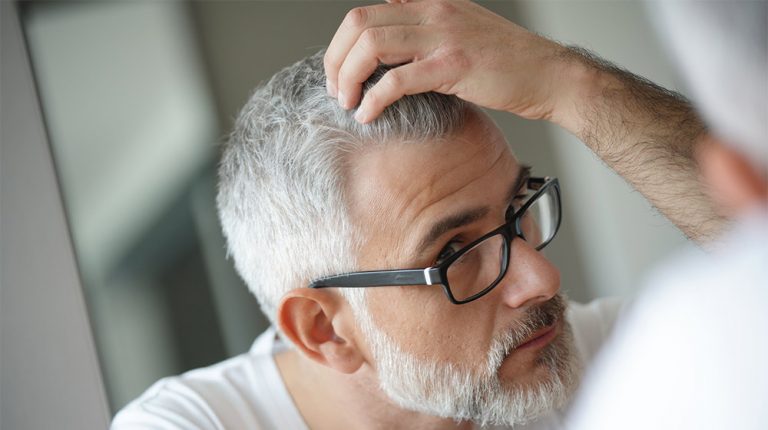
When it comes to hair loss, the term “DHT blocker” is bound to show up in your search results. But, what is a DHT blocker, and do DHT blockers work in reversing hair loss?
This article aims to answer these questions and discuss a few different ways of incorporating DHT blockers into your daily routine.
Subscribe for more
Join our newsletter to get the latest news, tips, and stories from Opt Health.
What Is DHT And Why Does It Cause Hair Loss?
The acronym DHT stands for dihydrotestosterone which is a hormone derived from testosterone. DHT has two sides to it. On one end, it is partially responsible for why men develop a deep voice, grow body hair and muscle, plus it’s related to having a healthy sex drive.
On the other end, DHT is also partially responsible for men losing their hair. Why? Scientists have discovered that when DHT converts to testosterone at the hair follicles, it causes androgenic alopecia, more commonly known as male pattern baldness.
What Are DHT Blockers And How Do DHT Blockers Work?
DHT blockers are designed to block DHT from binding to receptors in your scalp before it’s too late and triggers hair loss. It is crucial to note DHT blockers are not going to stop male pattern baldness completely. But, they can slow hair loss down and possibly prevent further hair loss from occurring.
Now let’s take a look at the different methods of blocking DHT that you can integrate into your everyday schedule.
Prescription Medicine Used As DHT Blockers
Prescription medicine can be used for utilizing DHT blockers. For example, Finasteride is a medication that helps inhibit the conversion of testosterone to DHT. It can be consumed orally or used as a topical solution. Regarding DHT blockers for women, the female equivalent to Finasteride is Spironolactone, which can also come in oral and topical forms.
Shampoos and Conditioners Used As DHT Blockers

Obtaining a prescription may be difficult for some people. Still, DHT blocking shampoo and conditioning is an option much more readily available. The key ingredients to look for in these products are either ketoconazole, saw palmetto, or Pyithione Zinc. All of which can help block DHT and stimulate hair growth.
Vitamins Used As DHT Blockers
While multivitamins are good to take for general health, if you want to use vitamins to help block DHT from causing hair loss, biotin supplements are your go-to option. A double-blind, placebo-controlled study demonstrated that biotin can help counteract hair thinning and also increase hair growth. Other vitamin supplements such as iron and zin are also worth considering trying.
Natural DHT Blockers

When it comes to reversing hair loss, many are interested in the all-natural approach. If that’s you, one of the best options for natural DHT blockers is pumpkin seed oil. While other natural options such as lycopene or rosemary oil have shown little efficacy, studies have indicated pumpkin seed oil as an effective supplement for combatting hair loss. One study found that participants experienced a 40% increase in hair growth after consuming 400mg of pumpkin seed oil for two years.
Foods That Act As DHT Blockers
The final way to block DHT without disrupting your daily schedule is to eat foods that act as DHT blockers. Foods rich in zinc, such as kale or spinach, and foods rich in lycopene, such as carrots or tomatoes, can be added to your daily meals as a simple way to help block DHT from causing hair loss.
Causes of Hair Loss Unrelated to DHT
A DHT blocker only helps when androgenic alopecia, commonly known as male pattern baldness, is the actual cause of follicle thinning. Hair loss can also stem from thyroid conditions, iron or other nutrient deficiencies, certain medications, or autoimmune conditions such as alopecia areata. High stress, illness, or a major physical change can also trigger telogen effluvium, which causes temporary shedding across the scalp. None of these conditions respond to a DHT blocker because DHT is not the underlying driver. A physician can evaluate your scalp and use bloodwork or an exam to confirm the specific diagnosis before you spend time on a protocol that cannot treat non-hormonal shedding.
If finasteride is one of the DHT blockers you're weighing, see how it compares directly with topical minoxidil. It also compares directly with dutasteride, the other 5-alpha-reductase inhibitor some men consider.
If you have questions about DHT blockers or any of the conditions discussed here, connecting with a doctor in a discrete setting has never been easier.
Opt Health is a telehealth platform that reconnects men with wellness, fitness, strength, and sexual vitality through scientific preventive medicine. From your own home, you can schedule with a physician, meet one-on-one via video conference, receive test results, and have medications delivered to your door.
For questions, inquiries, or appointments, don’t hesitate to contact us. Get personalized support and insight from top-tier physicians available 24/7.
Hair Loss Patterns That Respond to DHT Blockers
Androgenetic alopecia follows a recognizable physical distribution across the scalp. In men, this process typically appears as a receding hairline around the temples, thinning at the crown or vertex, or both areas changing together over time. When hair changes follow this specific distribution, follicle sensitivity points toward dihydrotestosterone activity. Learning how to tell if hair is thinning in these distinct zones helps you identify whether your shedding matches this classic presentation.
Other forms of shedding display very different physical patterns. Sudden thinning across the entire head, patchy circular bare spots, or rapid shedding along the sides and back point toward non-androgenic causes. Lowering DHT does not protect follicles that are responding to systemic illness, acute physical stress, or nutritional gaps. Reviewing what causes hair loss helps you separate generalized shedding from localized hormonal miniaturization.
Tracking the physical shape and progression of shedding provides a practical baseline. Documenting the first signs of hair loss gives you concrete details to review during an evaluation. A physician examines scalp follicle density and can order bloodwork to assess underlying health markers. This clinical evaluation confirms whether androgenetic alopecia is present before you begin targeted therapy.
Daily Habits That Support Scalp and Hair Health
Daily habits cannot replace medical therapies or alter genetic follicle sensitivity. They maintain the physical conditions your body needs to sustain normal hair growth cycles alongside targeted treatments. Consistent, restorative sleep provides predictable recovery intervals for tissue maintenance across the body. Unmanaged stress can disrupt hair growth cycles and trigger shedding that compounds pattern thinning. Prioritizing adequate sleep and daily stress reduction helps keep active follicles in their natural growth phase.
Direct care of the hair and scalp protects existing strands from physical damage while systemic treatments address the root cause. High-heat styling tools weaken the protein structure of the hair shaft and increase breakage near the surface. Hairstyles that pull tightly against the scalp create prolonged mechanical tension that can injure hair roots over time. Washing with a mild cleanser removes sweat, dead skin, and excess sebum without stripping the skin barrier, keeping the scalp surface receptive to topical treatments.
Combining daily scalp protection with an established medical regimen gives your follicles the environment needed to preserve density. If shedding continues despite consistent routines, review your progress with a healthcare provider to assess your regimen and rule out other contributing factors. You can evaluate structured treatment options in a physician-guided hair loss protocol to see how daily care fits into a comprehensive clinical plan.
The Opt Take on DHT Blockers
Hormone levels and hair thinning patterns should be evaluated through laboratory testing before starting treatment. Trying multiple over-the-counter products in sequence often delays identifying the underlying cause of hair loss. Thinning can relate to androgen receptor sensitivity, changes in circulating testosterone and dihydrotestosterone, thyroid function, or systemic inflammation. A blood panel establishes an objective baseline. Your physician uses those specific values to determine whether a DHT blocker or an alternative medical strategy fits your physiology.
At Opt Health, membership begins with a blood panel of 55+ biomarkers collected at home or at a partner lab. The panel evaluates hormones, inflammation, cardiovascular risk, and metabolic health. During a 1:1 consultation, an Opt Health physician reviews your bloodwork alongside your current medications and existing health conditions. When prescription treatments are appropriate, prescriptions can be shipped directly to your door as part of your plan.
Follow-up blood panels and physician consultations repeat every three to four months. This recurring schedule allows your physician to track changes in your biomarkers and adjust your plan based on what your numbers do over time. You can review testing details and care tiers through Opt Health memberships.
Get started: Begin with Opt Health, where a physician reads your labs, builds your plan, and adjusts it over the loop.
This article is part of our guide to testosterone. See how physician-managed TRT works at Opt Health.


Start Today
Your health, your terms. Discover how personalized care can transform not just the way you feel, but how you live.